


The results obtained at our center are scientifically analyzed according to patient age and the type of treatment applied, and are shared transparently.
Success rates in IVF treatment depend on many factors, including the patient’s age, egg and sperm quality, the treatment protocol used, and laboratory conditions.
The clinical pregnancy and live birth outcomes achieved at our center are evaluated according to age groups and shared transparently with our patients.
The data presented below are based on the actual outcomes of patients treated at our center during a specific period.
Clinical Pregnancy Rate by Age
What Is the Clinical Pregnancy Rate?
A clinical pregnancy is a pregnancy confirmed by the visualization of a gestational sac on ultrasound after embryo transfer.
Clinical pregnancy rates are among the first and most important indicators of success in IVF treatment. As age increases, ovarian reserve and genetic quality change, so a natural decline in these rates is expected.
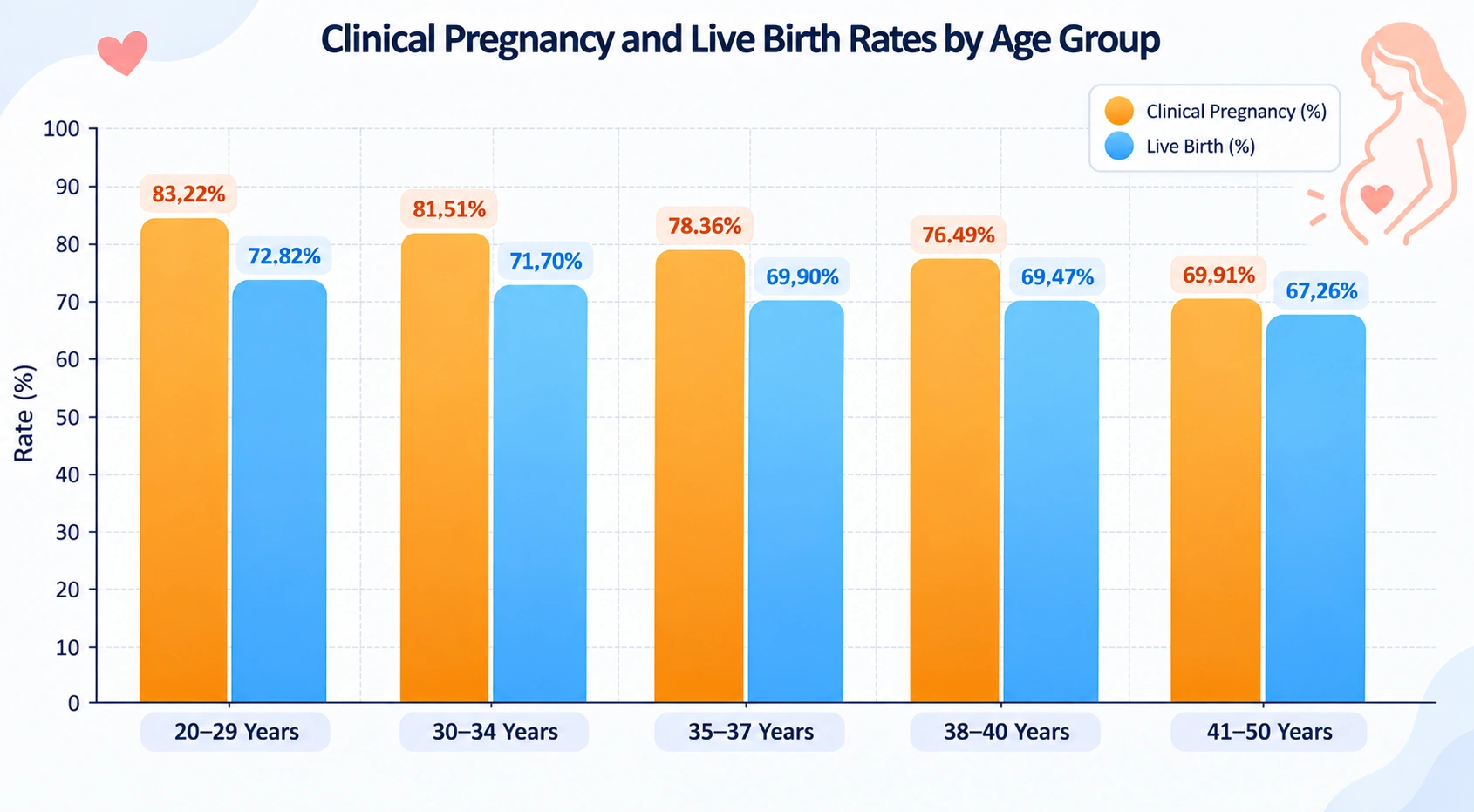
| Age | Clinical Pregnancy | Live Birth |
|---|---|---|
| 20–29 | 83.22% | 72.82% |
| 30–34 | 81.51% | 71.70% |
| 35–37 | 78.36% | 69.90% |
| 38–40 | 76.49% | 69.47% |
| 41–50 | 69.91% | 67.26% |
Clinical pregnancy rates by age were observed at 83.22% in the 20–29 age group and 69.91% in the 41–50 age group.
Live Birth Rate by Age
Why Is the Live Birth Rate More Important?
The live birth rate reflects the ultimate success of IVF treatment. Even when a clinical pregnancy is achieved, not every pregnancy results in a live birth.
For this reason, when evaluating success at our center, not only pregnancy rates but also live birth rates are taken into account.
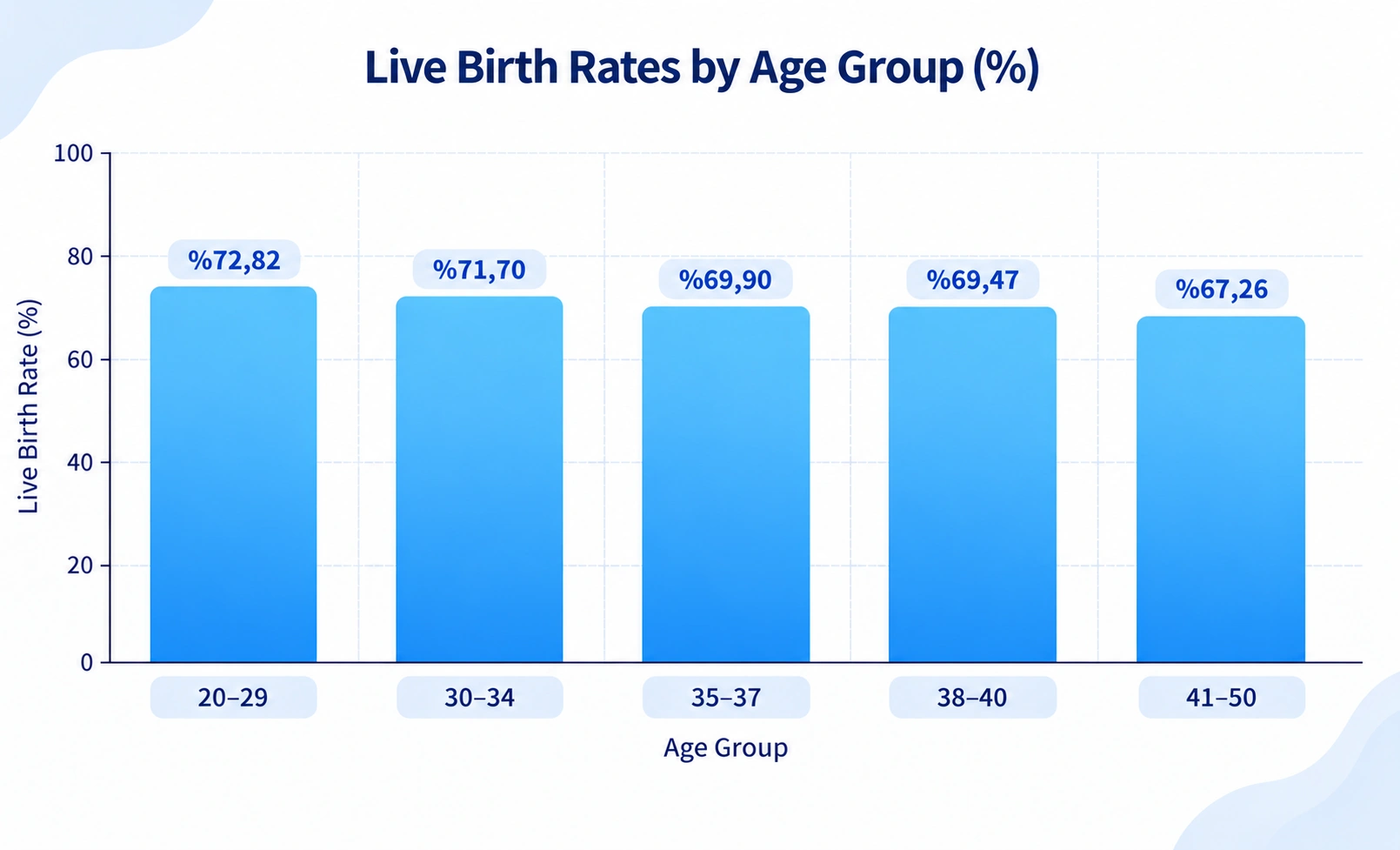
| Age | Live Birth |
|---|---|
| 20–29 | 72.82% |
| 30–34 | 71.70% |
| 35–37 | 69.90% |
| 38–40 | 69.47% |
| 41–50 | 67.26% |
At our center, live birth rates were measured at 72.82% in the 20–29 age group and 67.26% in the 41–50 age group.