



Sperm donation is a method that men whose sperm production has stopped, or who have no chance of obtaining healthy sperm, can turn to in order to have a child. It uses sperm from a donor who has passed screening tests, supplied by a recognised sperm bank.
Bank sperm can be used for insemination (IUI) or IVF (ICSI). The chance of success depends largely on the mother's age and the number of eggs.
DrHIT (Dr.HIT) Cyprus IVF Center is led by obstetrician-gynaecologist Dr. Halil İbrahim Tekin in Famagusta / Northern Cyprus.
Sperm donation at a glance
- Who it is for: No sperm at all in the semen, genetic incompatibility, or single women who want to have a child.
- Methods: Insemination with bank sperm (IUI) or ICSI (IVF) with bank sperm.
- Sperm banks: Cryos Denmark, Seattle Sperm Bank and European Sperm Bank.
- Legal status: A sperm bank cannot be established in the TRNC; sperm is imported from recognised banks with ministry approval.
- Success: Depends on the mother's age; if conditions are favourable, it is around 60%, as in standard IVF.
Who Is Sperm Donation For?
Sperm donation is a method frequently used when there is no sperm at all in the semen. It is also used when an unmarried woman who wants to have a child chooses, of her own will, to conceive with donated sperm.
If there is genetic incompatibility between the woman and the man, it is also possible to have a child with donor sperm.
A febrile illness in childhood, usually mumps, can affect both testicles and lead to a condition called orchitis. People who have previously had orchitis or testicular inflammation may develop sperm deficiencies of varying degrees in later years.
Varicocele surgery provides no benefit in azoospermia and low sperm count. In patients with high hormone levels, medication provides no benefit.
In some newborn baby boys, the testicles remain in the inguinal canal and do not descend into their normal position. Testicular tissue that stays inside the abdomen because of an undescended testicle loses its function. For this reason, the testicles should be brought down surgically as soon as possible.
Sperm Donation
If the testicles are damaged by chemotherapy, radiotherapy or surgery used in cancer treatment, there is no option left other than having a child through sperm donation.
The testosterone hormone and anabolic drugs taken by athletes as muscle builders have been shown to cause permanent damage to testicular tissue. These muscle-building drugs, used for long periods and in high doses, must be used with caution.
Some congenital conditions in baby boys prevent sperm production. In conditions such as Y chromosome deletions and Klinefelter syndrome, in which there is an extra X chromosome, there is no sperm production in the testicles.
Sperm donation is a method that men whose sperm production has stopped can turn to in order to have a child. If there is no chance of obtaining healthy sperm in any way, or if the sperm obtained is not of sufficient quality for pregnancy, there is as yet no other treatment method. Among Shia Muslims and in some Muslim countries, this procedure has been legalised through a properly conducted marriage contract. Iran and Lebanon are a few examples.
Sperm Donation Procedure
Before deciding on sperm donation, several methods are used to try to obtain sperm. The first method is collecting seminal fluid by masturbation. Seminal fluid or sperm can also be obtained by prostate massage performed by urologists, and sperm cells are searched for under the microscope. If these techniques are used and it is certain that no sperm can be obtained, surgical methods are used. Some of these procedures are TESE, microTESE, TESA, MESA and PESA. In our clinic, in addition to these techniques, we have achieved very successful results with a simple technique and continue to do so.
Stem cell research aimed at sperm production is still ongoing today. Partial success has been achieved in animal experiments, but the desired stage has not yet been reached.
How Is Sperm Donation Performed?
First, the couple is informed about sperm donation treatment and the donor sperm. The characteristics of the donor sperm and the screening tests performed are explained. Before the procedure begins, a consent form is completed and signed confirming that the couple accepts the donation procedure and has received the necessary information. Tests are then carried out on the female partner. The subsequent steps are similar to standard IVF or insemination (IUI). After medication for egg development, either egg collection is performed or ovulation is triggered and insemination is carried out.
Sperm donation is performed in two ways.
1. Insemination with Bank Sperm (IUI)
With this method, the statistical probability of pregnancy is around 20 percent. To perform this procedure, the woman's fallopian tubes must be examined carefully. Even if the tubes are open, pregnancy is almost impossible if there are adhesions. The ability of the tubes to move freely is vital for pregnancy.
2. ICSI with Bank Sperm
On the day of egg collection, the previously selected bank sperm is thawed and microinjection is performed. Suitable embryos are selected from those that develop. After that, the usual IVF process continues. The embryos are evaluated according to their quality and 2-3 of them are transferred to the mother's uterus. The remaining embryos can be frozen and stored.
Sperm Bank
Since this procedure began in the TRNC, we have been working with Cryos Denmark. We also work with Seattle Sperm Bank and European Sperm Bank. We give all our patients the certificates we receive from Cryos and the other banks. These companies are among the oldest, most reliable and largest banks in the world. Under TRNC law, it is not possible to establish a sperm bank. All sperm used is imported with ministry approval and only from recognised banks.
Tests Performed on Sperm Donors
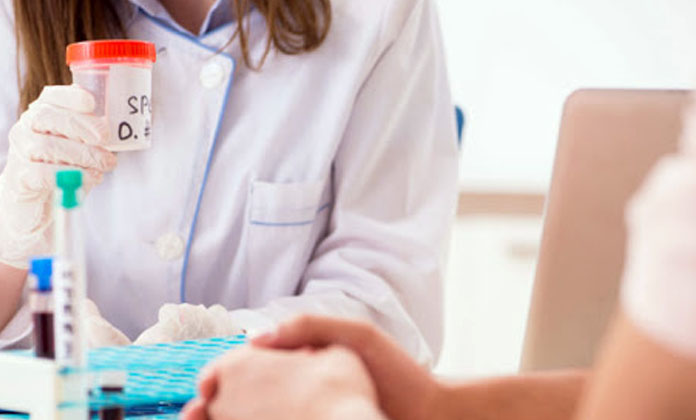
People who apply to sperm banks are first screened for genetic and sexually transmitted diseases. A psychological assessment is carried out to determine whether the donor candidate is suitable for donation. The physical characteristics of the mother, father, siblings and older relatives are recorded. The necessary procedures are completed in line with the relevant regulations of the country where the bank is located.
Screening Tests for Donors
- Medical history of siblings, parents and older relatives
- Psychological profile
- HIV risk assessment, drug use
- HIV
- HTLV
- Hepatitis B
- Hepatitis C
- Syphilis
- Gonorrhoea
- Chlamydia
- CMV (Cytomegalovirus)
- Cystic fibrosis
- Thalassaemia
- Chromosome test
Sperm samples taken from donors who pass these tests are washed, divided into tubes and frozen. Six months after freezing is completed, the donors are called back and the infectious disease tests are repeated. If everything is in order, the bank makes this sperm available for use.
Sperm Donation Success Rate
Because the sperm to be used has already been tested, the chance of pregnancy depends on the mother's age. If factors such as the mother's age and the number of eggs are favourable, the chance of pregnancy is around 60%, as in standard IVF.
Frequently Asked Questions About Sperm Donation
What is sperm donation?
Sperm donation is a method in which sperm from a donor who has passed screening tests is used so that men whose sperm production has stopped, or who have no chance of obtaining healthy sperm, can have a child. The sperm is supplied by a recognised sperm bank.
Who is sperm donation for?
It can be used for men with no sperm at all in the semen, for couples with genetic incompatibility between the woman and the man, and for unmarried women who choose to have a child.
What is tried before deciding on sperm donation?
First, sperm is searched for under the microscope in seminal fluid obtained by masturbation or prostate massage. If no sperm is found, surgical methods such as TESE, microTESE, TESA, MESA and PESA are used.
How is sperm donation performed?
It is performed in two ways: insemination with bank sperm (IUI) or ICSI with bank sperm. In ICSI, the bank sperm is thawed on the day of egg collection, microinjection is performed and suitable embryos are transferred to the mother's uterus.
What is the chance of pregnancy with bank sperm insemination?
With insemination using bank sperm, the statistical probability of pregnancy is around 20 percent. For this, the woman's fallopian tubes must be open and able to move freely.
What does the success of sperm donation depend on?
Because the sperm has already been tested, the chance of pregnancy depends on the mother's age. If factors such as the mother's age and the number of eggs are favourable, the chance of pregnancy is around 60%, as in standard IVF.
Which banks supply the donor sperm?
We work with Cryos Denmark, Seattle Sperm Bank and European Sperm Bank. All patients receive the certificates issued by the banks.
Is there a sperm bank in the TRNC?
No. Under TRNC law, it is not possible to establish a sperm bank. All sperm used is imported with ministry approval and only from recognised banks.
What tests are performed on sperm donors?
Donors are screened for genetic and sexually transmitted diseases and undergo a psychological assessment. Tests include HIV, HTLV, hepatitis B, hepatitis C, syphilis, gonorrhoea, chlamydia, CMV, cystic fibrosis, thalassaemia and a chromosome test; the family medical history is also reviewed.
When is donor sperm made available for use?
Six months after the sperm is frozen, the donor is called back and the infectious disease tests are repeated. If everything is in order, the bank makes this sperm available for use.
What Matters Most in Sperm Donation?
Sperm donation is an important option for men who have no chance of obtaining healthy sperm and for women who want to have a child. It is very important that the sperm used comes from recognised banks, has passed the necessary tests and is obtained with ministry approval.
The method of treatment should be decided together with a specialist doctor, taking into account the woman's age, the number of eggs and the condition of her fallopian tubes.