


Cytoplasm and Mitochondrial Transfer
In short: Cytoplasm and mitochondrial transfer adds healthy cell parts from a donor egg to a patient's egg during IVF. Mitochondria give the egg its energy. The method is mainly discussed for repeated IVF failure, older women and mothers who carry mitochondrial disease. It is still considered experimental, long-term data is limited, and laws differ between countries.
What Is Cytoplasm and Mitochondrial Transfer?
Cytoplasm and mitochondrial transfer is a newer technique in fertility treatment.
It is done during IVF (in vitro fertilization). Healthy parts of a cell are added to the egg or embryo. These parts include mitochondria, which are essential for embryo health. They are taken from younger, healthier donor cells.
Some results are promising, especially for patients with repeated IVF failure.
What Are Cytoplasm and Mitochondria?
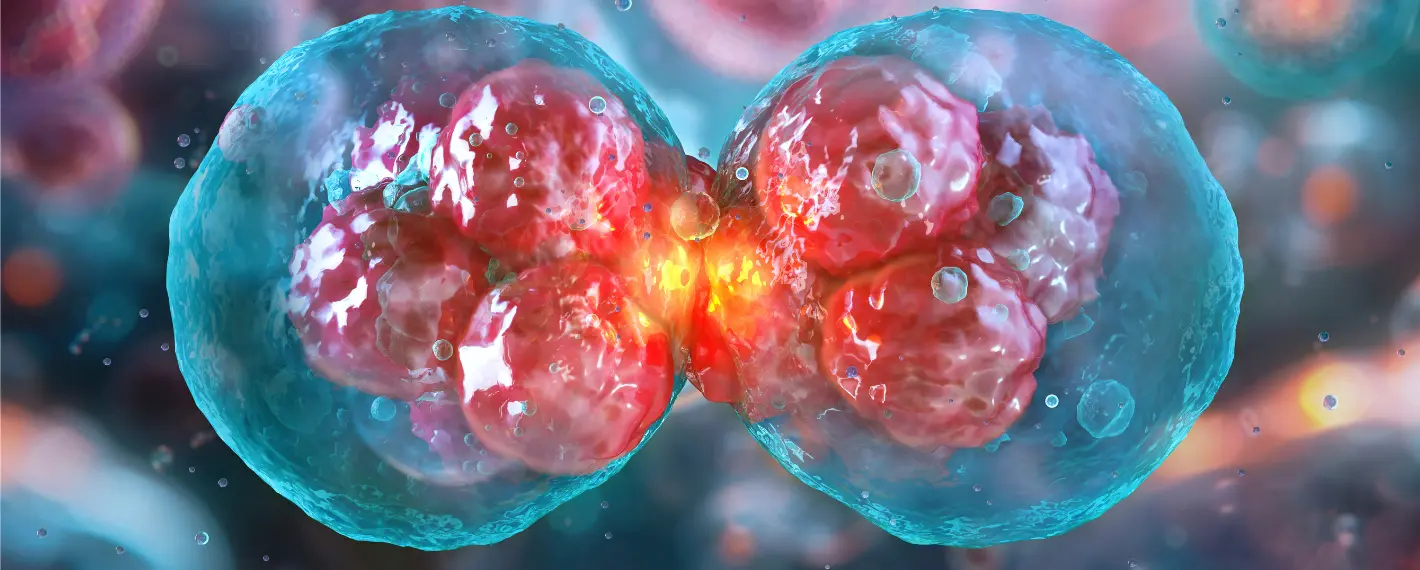
Cytoplasm is the fluid inside a cell. Mitochondria are tiny parts of the cell that make its energy. Both are essential for a healthy embryo to grow.
How Is It Done?
The transfer is done during IVF. There are two main methods:
- Cytoplasmic transfer (CT): Healthy cytoplasm from a donor egg is injected into the patient's egg. This adds to or replaces part of the egg's own cytoplasm.
- Donor egg mitochondrial transfer (OOMT): Mitochondrial DNA (mtDNA) and cytoplasm are taken from a healthy donor egg. They are moved into the patient's egg.
One goal is to stop damaged mitochondrial DNA from passing from mother to child.
The Steps
- Eggs are collected from the donor. Their mitochondria are taken out and kept.
- The patient's eggs are collected.
- Under a microscope, the donor's healthy cell parts are added to the patient's eggs. This is very delicate work.
- The eggs are fertilized with sperm using standard IVF.
When Is It Used?
This technique is mainly discussed for:
- patients with repeated IVF failure
- women over 40, whose eggs may have weaker mitochondria
- women who carry mitochondrial diseases (mtDNA disorders)
- some couples with infertility for other reasons
Mitochondrial diseases pass only from the mother. So mitochondrial transfer may help stop these diseases from passing to the child.
How Successful Is It?
Results depend on the type of procedure, the cause of infertility and other factors.
Some studies show promising results. But mitochondrial transfer is still considered experimental. There is not yet enough long-term data on its outcomes. Your doctor can explain what the current evidence means for you.
What Are the Risks?
The risks are not yet fully known. Some research suggests possible health risks for children. So the procedure must be carefully planned and done under proper medical conditions.
What Is the Legal Situation?
There are no fully settled laws on mitochondrial transfer around the world. Some countries allow it under specific rules. Others ban it. Always check the law in the country where you plan treatment.
The Science Behind It
The Egg Cell
A human egg has two main parts. The nucleus sits inside the egg, a bit like the yolk inside a chicken egg. It carries the genetic information passed down from the woman's family. This is the basic plan needed to create a new person.
A sperm is also needed. It brings the genetic material from the father.
All our cells contain DNA, the basis of what we inherit. Most DNA is inside the nucleus. But some DNA is also found in the mitochondria, outside the nucleus.
The Cell Nucleus
The nucleus passes on all the information the new body needs to form and work. As a woman ages, the genetic material in her eggs can become damaged.
This is linked to the higher risk of genetic disorders and miscarriage at older ages. A well-known example is Down syndrome. Its risk is much higher in women aged 40 than in women aged 20.
Mitochondria
Mitochondria give the cell the energy it needs. In recent years, many diseases caused by changes in mitochondrial DNA have been found.
These diseases affect about 1 in 10,000 children. They come from faulty mitochondria passed on by the mother. The father's mitochondria are not passed to the baby.
Mitochondria contain 37 genes and thousands of copies of their DNA. Breaks or changes have been found at about 250 points in these 37 genes.
What Is the Goal of the Transfer?
The goal is to support the eggs of older women, where DNA damage and weaker mitochondria are more common.
Cytoplasm is taken from young donors with good fertility and no known genetic disease. It is added to the older woman's egg to support its energy and health.