


- By: yahya
- 2 September 2026
Embryo Freezing in IVF
In short: Embryo freezing lets you store good-quality embryos from IVF and use them later. Embryos are frozen very fast (vitrification) and kept at about -196°C. In a frozen embryo transfer, a thawed embryo is placed in a prepared womb, so you usually do not need new egg collection. Current data on the health of babies born this way is reassuring.
Table of Contents
- What Is Embryo Freezing?
- What Is Frozen Embryo Transfer?
- Why May Frozen Embryo Transfer Be Preferred?
- How Are Embryos Frozen?
- How Do You Prepare for Frozen Embryo Transfer?
- Emotional and Financial Benefits of Embryo Freezing
- Are Babies Born From Frozen Embryos Healthy?
- How Long Can Embryos Be Stored?
- Who May Consider Embryo Freezing?
- Frequently Asked Questions
- A Personal Approach to Embryo Freezing and Transfer
Thanks to advances in IVF, the chance of pregnancy is no longer limited to one treatment cycle. Embryo freezing is a key fertility technology. It lets good-quality embryos from IVF be stored for later use.
With this method, couples can use embryos from the same egg collection again in the future. So they may not need new ovarian stimulation and egg collection before each transfer.
At DrHIT Cyprus IVF Center, embryo freezing is planned for each patient. We look at your age, embryo development, the condition of your womb and your treatment plan together.
What Is Embryo Freezing?
Embryo freezing means storing embryos at very low temperatures to use them later. These are embryos that develop after fertilization in IVF and are suitable for transfer.
Embryos are usually checked on set days of treatment, based on how far they have developed. Embryos that are not transferred and are suitable for freezing can be used in a future pregnancy attempt.
This method can offer couples important benefits:
- More than one transfer can come from the same egg collection.
- It may reduce the need for a new egg collection.
- It gives more flexibility in planning a pregnancy.
- Stored embryos can be used for a second or later child.
- In some cases, the transfer can be moved to a better time.
The decision to freeze embryos is not the same for everyone. The embryology and IVF team decides which embryos to freeze and when to transfer them, case by case.
What Is Frozen Embryo Transfer?
In a frozen embryo transfer, embryos frozen during IVF are thawed. Then they are placed in a womb that has been properly prepared.
Unlike a fresh transfer, you usually do not need ovarian stimulation or egg collection again.
A key step before transfer is preparing the inner lining of the womb (the endometrium). It must be ready for the embryo to attach.
Depending on your situation, the transfer may be done:
- by following your natural cycle
- in a cycle prepared with hormone medicines
- with another personal plan chosen by your doctor
The aim is to match the embryo’s stage with the right time in the womb lining as closely as possible.
Why May Frozen Embryo Transfer Be Preferred?
Every IVF patient has different needs. A fresh transfer may suit some patients. For others, freezing the embryos and transferring later may be better.
A frozen transfer may be preferred for these reasons:
Preparing the Womb at a Better Time
Medicines used to stimulate the ovaries can change hormone levels a lot. For some patients, waiting for a later cycle lets the womb lining be prepared in a more controlled way.
Risk of Ovarian Hyperstimulation
In some patients, the ovaries respond very strongly to treatment. This can cause a risk of OHSS (ovarian hyperstimulation syndrome). For safety, the embryos may be frozen and transferred later.
More Flexible Timing
Freezing lets the transfer be timed around your health and the preparation of your womb.
Planning a Future Pregnancy
Freezing good embryos from IVF can give couples the chance to plan a second or later pregnancy in the coming years.
How Are Embryos Frozen?
Today, most clinics use vitrification, a fast freezing method.
With older methods, ice crystals could form inside the cells. This was a big problem. With vitrification, embryos are cooled very quickly to help stop harmful ice crystals from forming.
The process usually has these steps:
1. Checking the Embryo
Embryologists check the growing embryos using set criteria. They choose the ones suitable for freezing.
2. Using Protective Solutions
Embryos are passed through special solutions. These help protect the cells during freezing.
3. Fast Freezing
With vitrification, embryos reach extremely low temperatures in a very short time.
4. Storage in Liquid Nitrogen
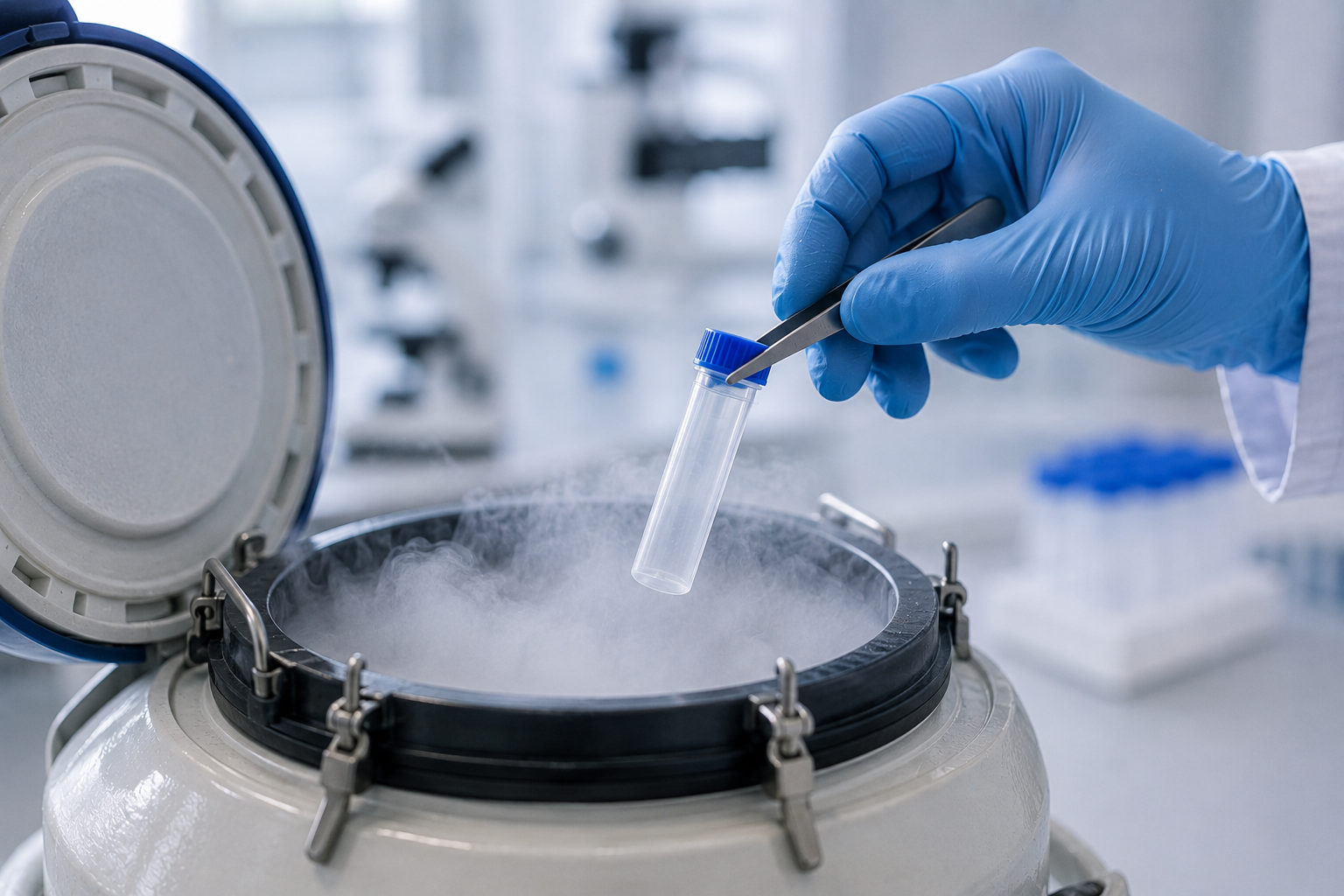
Frozen embryos are kept in liquid nitrogen at about -196°C. They are stored in clearly labelled and monitored storage systems.
When it is time for transfer, the embryos are thawed with care. Then the lab checks their development again.
How Do You Prepare for Frozen Embryo Transfer?
The main goal is to prepare the womb lining so the embryo can attach.
The steps can differ from person to person. They usually include:
Preparing the Womb Lining
Your natural cycle may be followed. Or, if your doctor decides, you may be given hormones such as estrogen and progesterone.
Ultrasound Checks
The thickness and structure of the womb lining are checked with ultrasound. Hormone levels may also be tested when needed.
Thawing the Embryo
On transfer day, or at the time set in your plan, the frozen embryo is thawed with care in the lab.
Embryo Transfer
The embryo is placed in the womb with a thin tube (catheter). The transfer is usually short. Most patients do not need anesthesia.
After the transfer, take the medicines your doctor prescribes regularly. Then have a pregnancy test on the set date.
Emotional and Financial Benefits of Embryo Freezing
IVF can be demanding for couples, not only medically but also emotionally and financially.
Having frozen embryos can make treatment easier for some couples. It can reduce the need for new stimulation and egg collection for the next attempt.
It may also help with:
- less physical strain during treatment
- avoiding the cost of a new egg collection
- more flexible planning of pregnancy attempts
- using stored embryos for a second child
But every patient’s plan and chance of pregnancy are different. So decisions about embryo freezing and frozen transfer should be made after a personal assessment.
Are Babies Born From Frozen Embryos Healthy?
A common worry is whether freezing affects the health of a future baby.
Embryo freezing and frozen transfer have been used in fertility treatment for many years. With vitrification, the success of freezing and thawing embryos has also risen a lot.
Current scientific data generally show that children born after frozen embryo transfer have reassuring health and development.
But pregnancy and birth results do not depend only on whether the embryo was frozen. Many factors matter, including the mother’s age, genes, embryo quality, past pregnancies and her general health.
How Long Can Embryos Be Stored?
With the right lab and storage conditions, embryos can be stored frozen for a long time.
Storage time depends on your medical situation and the laws of the country.
Ask your clinic for details about how long embryos can be stored, how to extend storage and your options for future use.
Who May Consider Embryo Freezing?
Embryo freezing may be an option for:
- couples who have extra good-quality embryos after an IVF transfer
- patients whose fresh transfer must be delayed for medical reasons
- patients at risk of ovarian hyperstimulation
- couples planning another pregnancy in the future
- patients whose womb is not ready for transfer at some stage of treatment
The decision should be made with an IVF specialist and the embryology team, based on your personal and medical situation.
Frequently Asked Questions
Is frozen embryo transfer painful?
Most patients say the transfer is painless or causes only mild discomfort. Anesthesia is usually not needed.
Do I need egg collection again for a frozen embryo transfer?
If you have usable frozen embryos, you usually do not need ovarian stimulation or egg collection again.
Which is more successful: frozen or fresh embryo transfer?
There is no single right answer for everyone. Success depends on many factors. These include the woman’s age, embryo quality, the womb lining, hormones and past treatment. The choice between fresh and frozen transfer is based on these checks.
Can an embryo be damaged when it is thawed?
Modern vitrification makes freezing and thawing as safe as possible. But it cannot be guaranteed that every embryo will keep developing the same way after thawing.
Can frozen embryos be used years later?
Yes. With proper storage and within the law, embryos can be kept for use in future years. Ask your clinic for advice about your own situation.
A Personal Approach to Embryo Freezing and Transfer
One of the most important keys to IVF success is a personal plan, not the same plan for everyone.
At DrHIT Cyprus IVF Center, we look at embryo development, the womb lining, your age, your hormones and your past treatment together. This helps us choose the right transfer time and method.
Used for the right patient and in the right plan, embryo freezing can give couples real flexibility, both now and for future pregnancies.
To find out if embryo freezing or frozen transfer is right for you, talk to our IVF specialists about your personal treatment options.
Note: This content is for general information only. It does not replace diagnosis or medical advice. Decisions about IVF and embryo transfer should be made by a specialist in gynecology, obstetrics and IVF after checking your own health.