


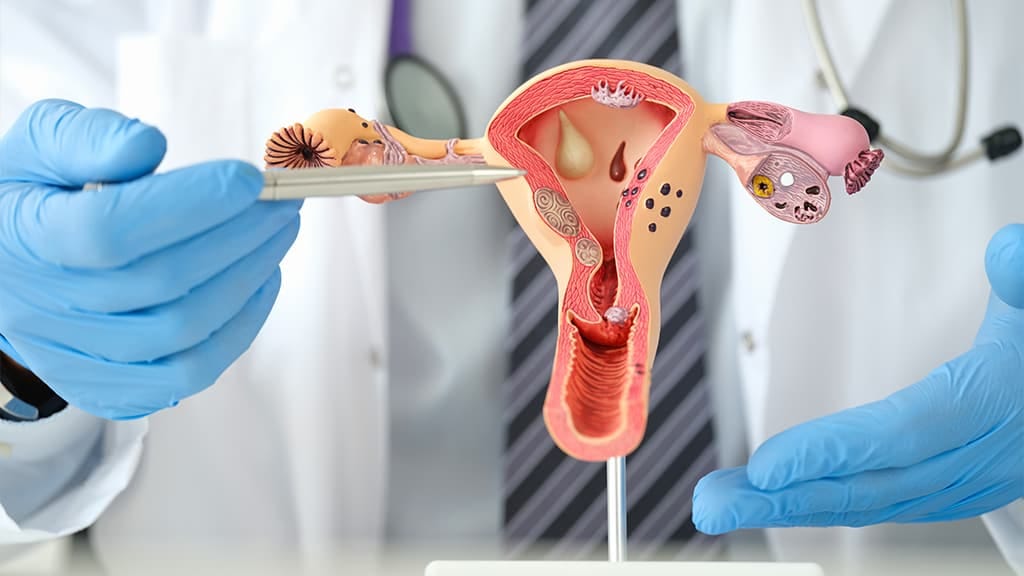
Blocked Fallopian Tubes
In short: The fallopian tubes must be open for natural pregnancy. If both tubes are blocked, the egg and sperm cannot meet. About 30% of female infertility cases are caused by blocked tubes. Keyhole surgery (laparoscopy) can often reopen them. If the tubes are badly damaged, IVF is usually the better choice.
Why Open Fallopian Tubes Matter
For natural pregnancy, the fallopian tubes must be open. The tubes catch the egg. They let the egg meet the sperm, and fertilization takes place there.
If one tube is blocked, natural pregnancy is harder but still possible. If both tubes are blocked, the egg and sperm cannot meet. Then natural pregnancy is not possible unless the blockage is treated. About 30% of female infertility cases are caused by blocked tubes.
In the 1970s, blocked tubes were treated with open surgery. Over the past 15 years, most of these operations have moved to laparoscopy. This is keyhole surgery with only small cuts. Today, almost every treatment once done with open surgery can be done this way.
Women who cannot get pregnant because of blocked tubes may have laparoscopy to reopen them. After a successful operation, the chance of natural pregnancy in the first year is about 60%.
How Are Blocked Tubes Opened?
Blocked tubes can be treated with laparoscopy or with laparotomy.
In laparoscopy, the surgeon makes a small cut below the belly button. A thin tube with a camera (a laparoscope) goes into the belly. The camera shows the womb, ovaries and tubes on a screen.
A few more small cuts let the surgeon use tiny tools. With these small cuts, the tubes can be treated while leaving only small scars.
In laparotomy, the surgeon makes a larger cut in the belly and does open surgery. This method is rarely used today.
Should Blocked Tubes Be Opened, or Should IVF Be Done?
For couples who cannot conceive because of blocked tubes, the first step is usually laparoscopy to reopen the tubes. Some countries suggest IVF right away. But in many European clinics, laparoscopy is the preferred first step.
After surgery, couples try for a natural pregnancy for a while. In the first year after surgery, about 60% of women may get pregnant naturally.
IVF may need more than one attempt if the first cycle does not work. Each attempt adds cost and medicine. If natural pregnancy does not happen within 1–2 years after surgery, IVF may then be considered.
Is Laparoscopy Right for Every Woman With Blocked Tubes?
No. Laparoscopy is not right for everyone. It may not help if the tubes are:
- badly damaged
- swollen or filled with fluid (hydrosalpinx)
- partly removed
When damage is serious, reopening the tubes or removing scar tissue may not improve fertility.
Badly damaged tubes may stop pregnancy completely. They can also raise the risk of repeated ectopic pregnancy. In these cases, IVF may give a better chance of pregnancy. Before IVF, the doctor may advise removing the damaged tubes with laparoscopy.
What Are the Risks of Tube-Opening Surgery?
Like any operation, this surgery has some risks. One risk is ectopic pregnancy. This is when a pregnancy grows inside the tube instead of the womb. The risk is higher in women whose tubes were damaged before.
If you know your tubes are damaged, see a doctor right away if your period is late or you think you are pregnant. Early diagnosis allows fast treatment if the pregnancy is ectopic.
Why Do Fallopian Tubes Become Blocked?
Common causes of blocked tubes include:
- infections of the reproductive organs
- past surgery in the belly
- endometriosis
- other inflammation in the pelvis
- sexually transmitted infections
- intrauterine devices (IUDs), which can lead to scar tissue
- tuberculosis or a burst appendix, which can cause infection
Scar tissue inside the tubes can damage their normal shape. Then the egg and sperm cannot meet, and natural pregnancy becomes impossible.
Frequently Asked Questions
What does it mean to have blocked fallopian tubes?
It means one or both tubes between the ovaries and the womb are partly or fully closed. Fertilization usually happens inside the tubes. So a blockage can stop the sperm and egg from meeting.
Can you get pregnant with blocked fallopian tubes?
If both tubes are fully blocked, natural pregnancy may not be possible. If one tube is open, pregnancy can still happen. When both tubes are blocked, IVF can help because it skips the tubes.
What causes fallopian tube blockage?
Common causes are pelvic inflammatory disease (PID), past pelvic infections, endometriosis, surgery in the belly or pelvis, scar tissue and ectopic pregnancy. Sometimes the exact cause is not found.
What are the symptoms of blocked fallopian tubes?
Many women have no clear symptoms. Some have pain or discomfort in the pelvis. This is more likely when fluid builds up in the tube (hydrosalpinx).
How are blocked tubes diagnosed?
Doctors usually use an X-ray dye test of the womb and tubes (HSG), an ultrasound scan or laparoscopy. These tests show whether the tubes are open and working.
Is IVF necessary if the tubes are blocked?
If both tubes are fully blocked or badly damaged, IVF is often the best option. In IVF, fertilization happens outside the body, so the tubes are not needed.